Start with one decision
Define one borrower segment, product, evidence set and required output before expanding the scope.
Connect applications, company documents, approved data sources and lending policies. AI assistance can structure evidence, run defined checks, surface exceptions and prepare a decision package for authorized review.
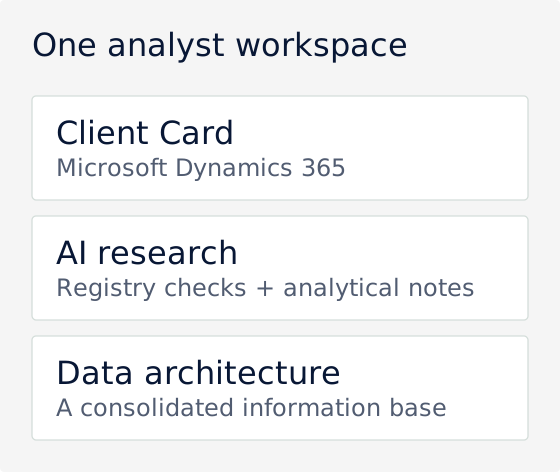
Business credit teams may move between application data, customer documents, internal systems, approved external sources and policy rules before assessment can begin.
Missing or inconsistent evidence creates manual follow-up. A controlled workflow can bring the inputs, checks, exceptions and source references into one case prepared for review.
Start with one bounded credit decision. The selected product, borrower segment, evidence requirements, systems and approval model determine the exact scope.
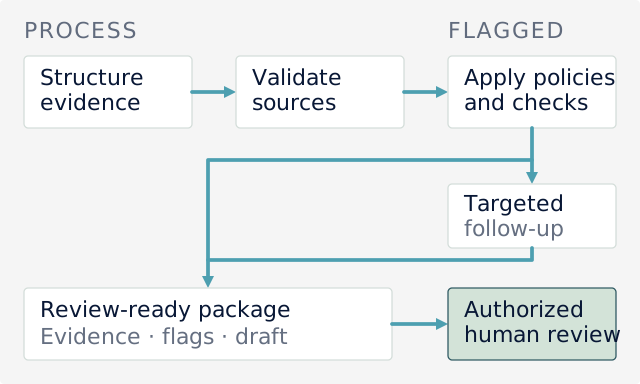
Bring application data and required documents into a consistent case record, then identify missing items for the selected process.
Apply the institution's company, identity and preliminary eligibility rules using approved data.
Extract and organize the financial and supporting information required for analyst review.
Compare submitted information across documents and approved internal or external sources, then surface inconsistencies.
Run the applicable risk, fraud, AML-CFT and lending-policy checks defined by the institution, and route exceptions for follow-up.
Prepare a structured case summary with evidence links, check status, flags and a draft recommendation for authorized review.
This example shows a business credit case. Adapt the evidence, checks and decision points to the selected product and policy.
Create one case from application data and the submitted document package.
Compare received evidence with the requirements for the selected product and borrower segment.
Extract relevant company, identity and financial information and keep its source attached.
Compare case data across the approved internal and external sources required for assessment.
Run institution-defined checks, surface mismatches and route only the affected evidence for follow-up.
Assemble the evidence, check status, exceptions and draft recommendation into the required decision package.
Define one borrower segment, product, evidence set and required output before expanding the scope.
The institution defines the applicable rules, thresholds, decision points and exception paths.
Keep important fields, checks and draft recommendations connected to the documents or data used.
Authorized reviewers retain the approval, override and escalation responsibilities defined by the institution.
Begin with one bounded process and borrower segment. Personal, Micro-SME, corporate and leasing decisions use different evidence and controls, so each variant needs its own defined scope.
The workflow can prepare evidence, check status, exceptions and a draft recommendation. Decision and approval rights follow the institution's policy and governance model.
Define the evidence required for each check, the conditions that trigger follow-up and the reviewer or escalation path. Only the affected part of the case needs to return for additional evidence.
Connect the approved application, document, data and decision systems needed for the selected process. Confirm the integration scope before implementation.
Define source provenance, data-quality controls, evaluation, review, override and escalation for the selected workflow. The implementation should make those controls visible to the authorized team.
Bring the application, evidence requirements, source systems, institution-defined policies and review path. We can use them to define a bounded first implementation.